01 / CLIENT CHALLENGE
OARC CLIENT PROJECT / GAMING COMMUNITY
An original gaming-community study about giving serious players a reason to return once the launch noise is gone.
THE WORK, IN CONTEXT
WHAT THIS IS
THE CLIENT STORY / OARC DELIVERY
01 / CLIENT CHALLENGE
02 / WHAT OARC DELIVERED

03 / WHAT THE WORK ACCOMPLISHED
RELATED OARC DELIVERY
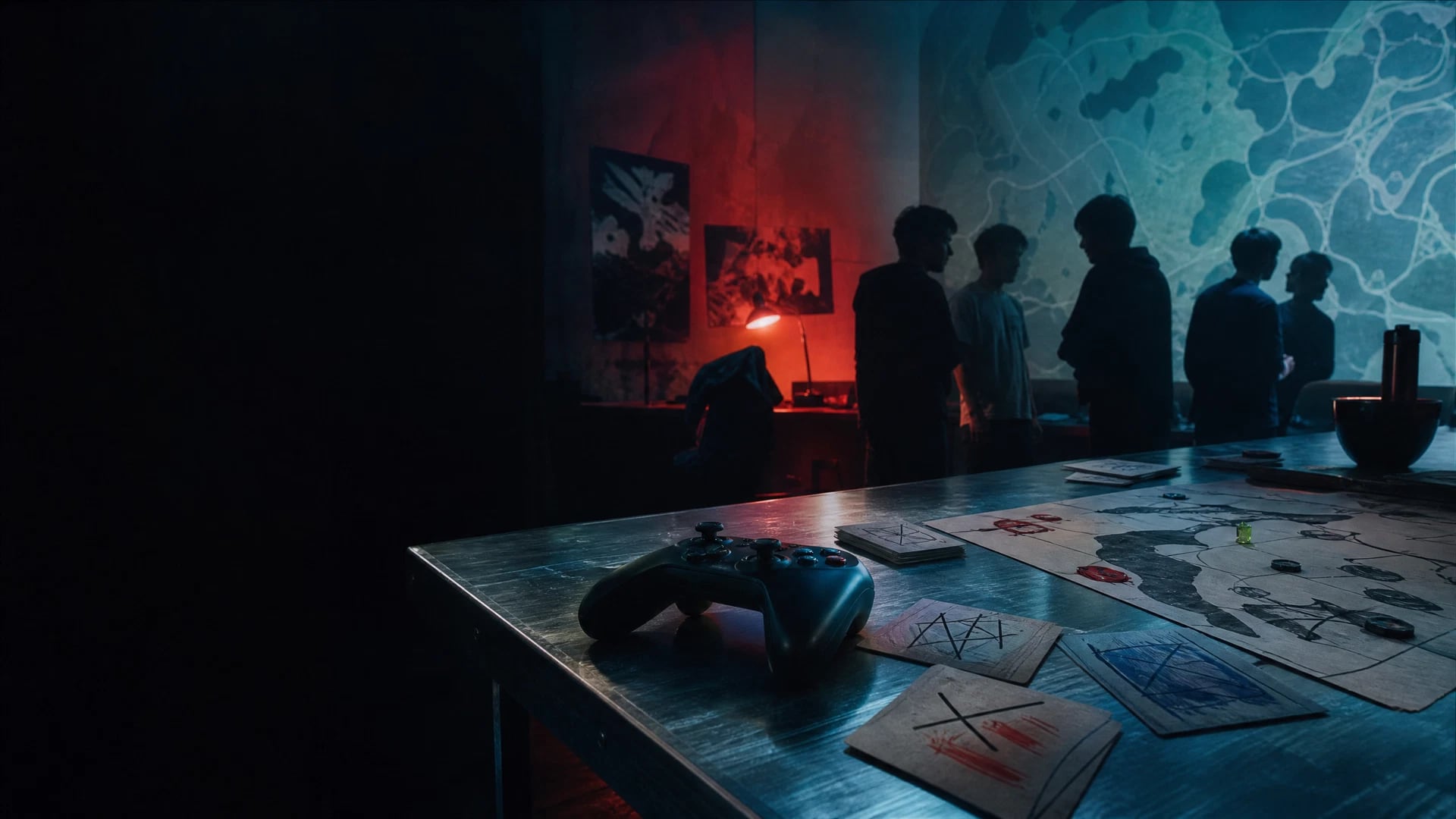
VERTEX AFTER LAUNCH is an OARC client project of gaming-community design. It explores how a game or interactive product could give people a structured reason to return after the noise of a launch week has passed, without relying on empty notifications or generic engagement prompts.
What makes a community return when the launch announcement is no longer doing the work?
The model creates a paced loop of play, contribution, recognition, challenge, and return. It uses a recurring mastery or shared-moment cue, then gives that cue a place in the community’s memory before introducing the next invitation.
The event ticket, calendar, community room, and return loop are OARC scenario artefacts. They do not use game intellectual property, player data, platform relationships, audience numbers, retention figures, or campaign performance claims.
This is for product, community, culture, and membership teams that need to extend a moment of attention into a durable participation rhythm. Bring the audience behaviour, post-launch dip, and real moment worth returning to; OARC can design the next reason before asking for another click.
READ THIS BY THE REAL PROBLEM
THE PARTICIPATION RHYTHM
A player has a moment worth carrying beyond the match.
The game gives people a reason to speak in specifics.A player contributes a useful moment to the wider group.
The community gains its own record.Another player’s effort becomes visible.
Participation feels noticed.A fresh but familiar next challenge appears.
Community becomes a habit.THE CLIENT JOURNEY
Vertex begins with a familiar launch pattern: the announcement travels quickly, the first impressions arrive, and then the community has to decide what is worth returning for once novelty fades.
The original model connects challenge, contribution, shared knowledge, and recognition in a cadence that players can anticipate. It does not rely on incessant event announcements or generic engagement prompts.
The design principle is a durable return loop: play, share, recognise, challenge, return. Vertex is a concept study and makes no claim about users, retention, community size, or game performance.
Vertex visualises a hypothetical player-return loop. It contains no game IP, user data, platform relationship, or real retention result.
CLIENT PROJECT / DELIVERED ARTEFACTTHE DELIVERY, IN MOTION
The model identifies a repeatable challenge or mastery cue.
The game gives people a reason to speak in specifics.Contribution has an intentional place, not an empty feed.
The community gains its own record.Recognition is designed as a recurring ritual rather than a one-off reward.
Participation feels noticed.The cadence makes the next event clear without demanding constant attention.
Community becomes a habit.Client delivery logic shown through the working sequence and supporting artefacts; private data and measured outcomes are not displayed on this page.
CLIENT CONCEPT PROJECT
Client project / campaign and prototype delivered by OARC
OARC delivered this concept, visual world, and working prototype against a focused client brief to make a sharper system or experience tangible.
Client brief, OARC thinking, and a delivered prototype.THE CLIENT PROJECT
It is an original OARC study of how a game community can build durable player return rituals after the launch period.
The model follows play, share, recognition, challenge, and return as a community rhythm.
No. Vertex is an OARC client project and contains no external game-client claim.
Vertex After Launch is an OARC client project of a player-community cadence, not a completed games-industry campaign.
CLIENT PROJECT / OARC DELIVERY AND PROTOTYPE