OARCDIGITALCLIENT SYSTEMS / OARC DELIVERY All stories

CLIENT SYSTEM / DATA GOVERNANCE

WHEN THEDATA COULDNOT AGREE.

A private system story about making fragmented distributor data more governed, usable, and traceable while protecting the client behind it.

Private engagement / selected system story
Illustrative data-governance system visual with no client data
DATA FOUNDATION / Client systemsSource: OARC’s public anonymous case record

THE WORK, IN CONTEXT

CLIENT SYSTEMS / DATA GOVERNANCE

Project details reviewed 27 August 2026
OARC ROLE
OARC’s public data case documents a data-governance intervention; client identity and operational detail are protected.
WHAT THE CASE SHOWS
Client business context, intervention method, and public OARC case.
CASE CONTEXT
OARC public data case and project assets.

WHAT THIS IS

When the same product, customer, or supplier exists in several systems with several answers, every downstream decision starts with doubt.

0110,000+ unique SKUs described
02ERP + CRM + legacy sources
03No client performance metrics published

THE CLIENT STORY / OARC DELIVERY

From pressure to
visible progress.

Every case starts with the client challenge, shows what OARC delivered, and makes the resulting shift easier to understand.
DATA FOUNDATION case visual
CLIENT CHALLENGE / CASE FRAMEThe primary case visual introduces the client problem and its working context.

01 / CLIENT CHALLENGE

The record changed depending on where you looked.

The public OARC record describes a national B2B and B2C distributor whose product IDs, customer and supplier records, dates, units, and addresses did not align across ERP, CRM, and legacy spreadsheets. The operating consequence was not theoretical: order error, fulfilment delay, forecasting uncertainty, and weak visibility all began with the same source problem.
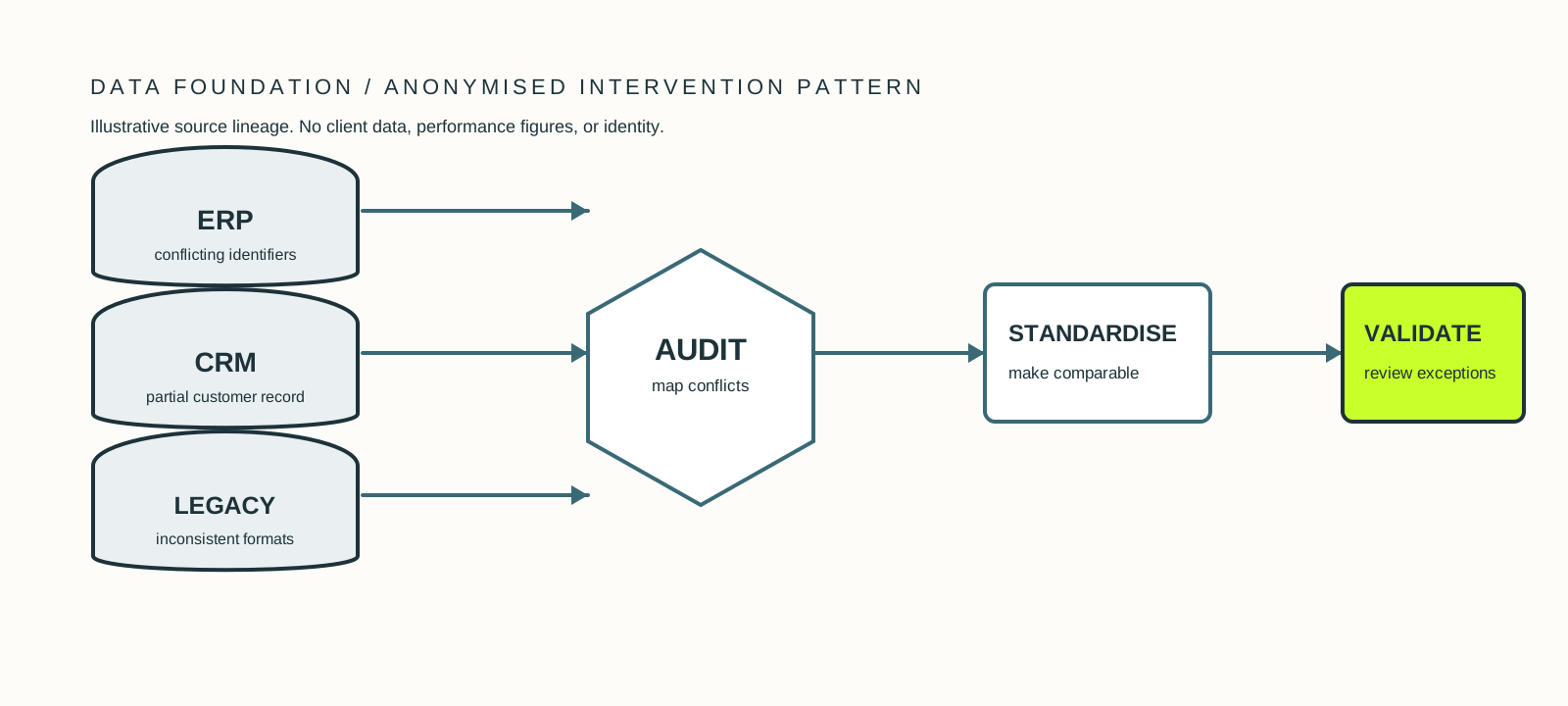
Illustrative data foundation lineage from conflicting source systems through audit and validation
ANONYMISED INTERVENTION PATTERNA source-safe visualisation of the published intervention logic. It contains no client record, identity, or outcome figure.

02 / WHAT OARC DELIVERED

Turn messy history into a governed system of record.

The documented approach moved from assessment to standardisation, matching, validation, enrichment, and visibility. The value of that sequence is traceability: a record should not simply look clean; its owner should understand what changed, why it changed, and what still needs attention.
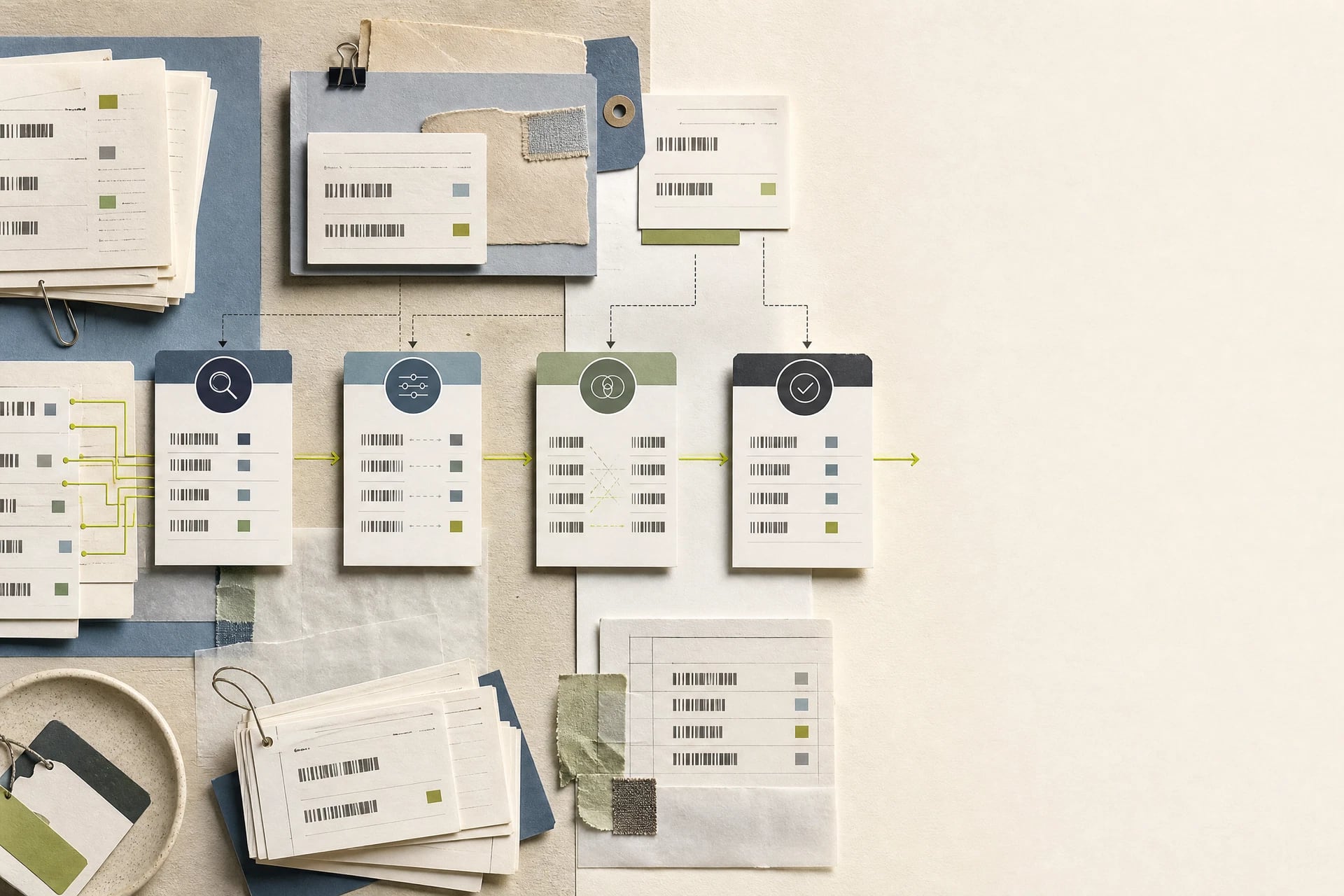
Editorial systems and lineage visual used to frame an operational problem
EDITORIAL SYSTEMS CONTEXTSupporting systems context for the case; it contains no client data or measured outcome.

03 / WHAT THE WORK ACCOMPLISHED

A transformation is only useful if the next exception can be found.

The public case describes validation rules and data-quality dashboards as the ongoing layer. This case does not repeat the source page’s performance figures because the named client, measurement method, timeframe, and publication approval are not available for this page. It shows the business logic of the system, not invented proof.

RELATED OARC DELIVERY

The capabilities behind
the work.

DATA FOUNDATION sits inside the same implementation practice: strategy, creative production, digital delivery, and accountable optimisation working together.
WHAT IT IS

What did the Data Foundation engagement address?

This private OARC engagement describes a national distributor whose product, customer, supplier, date, unit, and address records conflicted across ERP, CRM, and legacy sources. The public story explains the governed data-design approach while protecting the client identity and operating detail.

THE BUSINESS QUESTION

Start with the pressure.

How do you make a business record reliable enough for people to act on when the same entity has several competing versions across systems?

HOW OARC BUILT IT

Make the next decision clearer.

The documented intervention sequence is assessment, standardisation, matching, validation, enrichment, and visibility. The key discipline is not making data appear clean; it is retaining a traceable reason for each match, change, exception, and accountable review.

WHAT STAYS PRIVATE

Keep the important detail in view.

The public case supports the business problem and method. Client identity, raw records, private systems, and quantitative outcome claims stay private because they are not approved for publication on this page.

IF THIS LOOKS LIKE YOUR BUSINESS

Relevant if your records cannot agree

This is a useful starting point for an operator who is reconciling ERP, CRM, spreadsheets, documents, suppliers, or customer records and needs a governed route to an accountable system of record. OARC’s first task is to map the data consequence, ownership, and decision risk before proposing automation.

READ THIS BY THE REAL PROBLEM

Name the record
that will not agree.

A clear route from the work shown here to the next relevant conversation.
01DATA QUALITY, GOVERNANCE & INTEGRATIONS

How do you make a business record reliable enough for people to act on when the same entity has several competing versions across systems?

AI OPERATIONS
02PROJECT CONVERSATION

Relevant if your records cannot agree

EMAIL OARC / CONTEXT INCLUDED

PRIVATE CLIENT PROJECT / DELIVERY IN VIEW

The client stays private
because the work still deserves to be seen.

01 / CLIENT PRESSUREDistributor data had to agree across ERP, CRM, and legacy systems.
02 / OARC DELIVERYGoverned matching, validation, enrichment, and quality visibility.
03 / CLIENT APPROVALSpecific identity and operational records are not published on this page.
01THE PRESSURE

The record changed depending on where you looked.

The public OARC record describes a national B2B and B2C distributor whose product IDs, customer and supplier records, dates, units, and addresses did not align across ERP, CRM, and legacy spreadsheets. The operating consequence was not theoretical: order error, fulfilment delay, forecasting uncertainty, and weak visibility all began with the same source problem.

DATA FOUNDATION challenge visual
THE PRESSURECase visual / OARC delivery context
02THE INTERVENTION

Turn messy history into a governed system of record.

The documented approach moved from assessment to standardisation, matching, validation, enrichment, and visibility. The value of that sequence is traceability: a record should not simply look clean; its owner should understand what changed, why it changed, and what still needs attention.

DATA FOUNDATION OARC delivery visual
THE INTERVENTIONCase visual / OARC delivery context
03THE DISCIPLINE

A transformation is only useful if the next exception can be found.

The public case describes validation rules and data-quality dashboards as the ongoing layer. This case does not repeat the source page’s performance figures because the named client, measurement method, timeframe, and publication approval are not available for this page. It shows the business logic of the system, not invented proof.

Editorial systems and lineage visual used to frame an operational problem
THE DISCIPLINESupporting systems context for the case; it contains no client data or measured outcome.

ANONYMISED INTERVENTION PATTERN

See the decision logic.

A source-safe visualisation of the published intervention logic. It contains no client record, identity, or outcome figure.
Illustrative data foundation lineage from conflicting source systems through audit and validation
OARC explanatory artefact / status stated above
Illustrative four-stage data-governance process visual with no client data
ILLUSTRATIVE SYSTEM MAP / NO CLIENT DATA

The record needs a lineage.

This illustrative system visual explains the public intervention pattern: audit, standardise, match, validate. It does not depict client data, a client system, or a measured outcome.

APPROVED RECORDING REQUIRED BEFORE PUBLICATION
THE SYSTEM, IN MOTION

From conflict to
control.

Assess

Find every place where the same thing has a different answer.

WHAT THE SYSTEM DOES
Map identifiers, formats, missing fields, duplicates, and dependencies across source systems.
WHY IT MATTERS
The team can see the shape of the problem before changing the record.

PRIVATE CLIENT PROJECT

The client stays private.

Private UK distributor engagement. The client identity, website, social accounts, and operational data are not published.

Private engagement details reviewed 26 August 2026.

OARC public sourceView OARC’s public data case
PUBLIC LINKS

Client social links are not part of this release. The page focuses on the engagement’s problem, method, and decisions.

CLIENT SYSTEM

The system stays focused.
The work stays clear.

Private engagement / selected system story

The business pressure, OARC approach, and design decisions are shown clearly enough to understand the engagement.

Client identity protected. OARC delivery made visible.

THE CLIENT SYSTEMS

The answers a person—and a search engine—should be able to find.

01What was the business problem?

OARC’s public data case describes a distributor with product, customer, supplier, and format inconsistencies across ERP, CRM, and legacy data sources. The case frames the problem as an operational data-governance issue, not simply a technical cleanup task.

02What did the system do?

The public case describes assessing, standardising, fuzzy matching, de-duplication, rule-based validation, enrichment, and data-quality visibility. The rebuilt story presents these as a governed workflow from exception to accountable record.

03Why are the client name and results not shown?

This is a private engagement. Client identity, brand links, raw operational data, and quantitative results are not published without written client approval and a documented measurement basis.

CLIENT SYSTEMS

The client stays confidential. The discipline stays visible.

OARC’s public anonymous case record describes a governed data foundation for a national distributor. This rebuilt case protects the client and withholds unverified figures while making the operating logic of the work legible.

Visit the approved public source
OARC DIGITAL / RESEARCH-LED WORK© 2026